It is August. The thermometer hit 103 yesterday and it is on its way to 105 today. You walk out to check the sprinklers and notice the lawn that looked thick and green back in May is starting to show its age. There are thin patches near the driveway. A few yellow streaks run across the backyard. One corner looks like it might be giving up entirely.
This is not unusual for a Tri-Cities yard in midsummer. It is actually one of the most common things we hear from homeowners in Kennewick, Richland, and Pasco this time of year. The good news is that most summer lawn stress is manageable, and a lot of it is preventable. Knowing what is actually happening to your grass, and why, makes a real difference.
Here is what you need to know to protect your lawn through the hottest stretch of the year.
In this post, you’ll learn:
- Why Central Washington summers hit cool-season grasses especially hard
- How your watering habits and sprinkler system affect summer survival
- Which mowing and fertilization practices help versus hurt in peak heat
- What summer weeds and pests to watch for, and when to call a pro
Why Tri-Cities Summers Are So Hard on Lawns
Central Washington does not ease into summer. The Tri-Cities region regularly sees stretches of 100-plus-degree days with low humidity, relentless sun, and dry winds that pull moisture out of the soil fast. Rainfall from June through August is minimal. That combination is genuinely stressful for turf.
Most lawns in the Tri-Cities are planted with cool-season grasses like Kentucky bluegrass and tall fescue. These grasses grow best when temperatures are between 60 and 75 degrees. Once the heat climbs into the 90s and stays there, they slow down, pull resources toward their roots, and start to look rough.
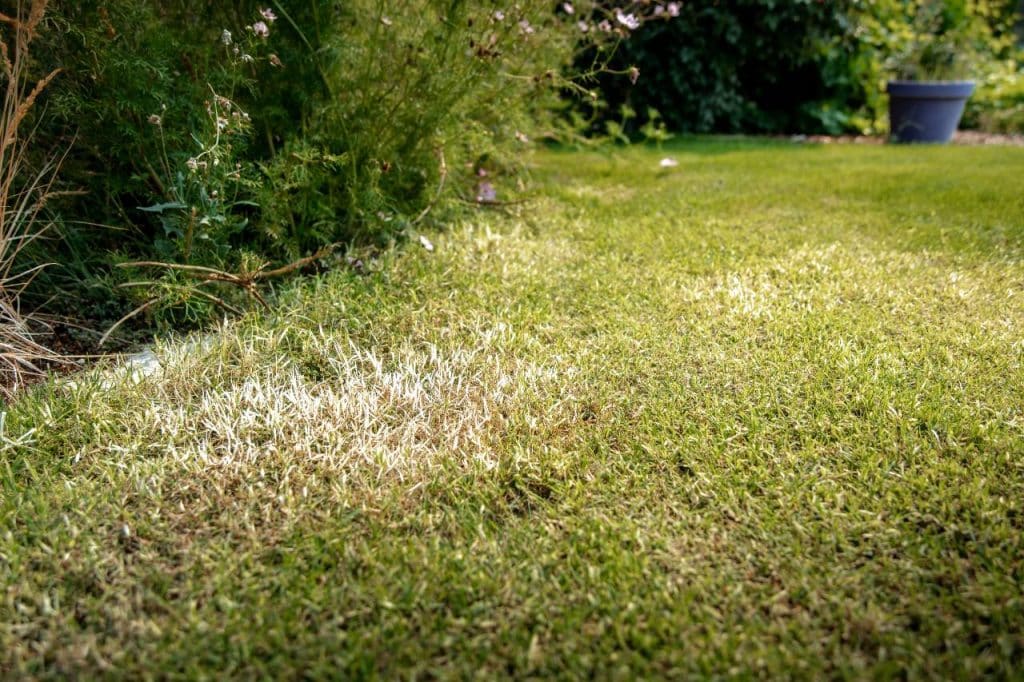
One thing worth knowing: a lawn that turns brown or goes dormant in August is not necessarily dead. Cool-season grasses can go dormant as a survival response to heat and drought, then green back up when temperatures drop and water returns. Actual damage, the kind that kills the grass, usually comes from extended drought without any irrigation, pest activity, or disease. If your lawn is browning evenly and you are still watering, dormancy is the more likely explanation.
Watering: The Single Most Important Variable
If there is one thing that determines whether a Tri-Cities lawn survives summer, it is watering. Specifically, how you water matters as much as how often.
Deep, infrequent watering trains grass roots to grow down into the soil where moisture stays longer. Shallow, frequent watering keeps roots near the surface, which makes the lawn more vulnerable every time the heat spikes. The goal is to water long enough to push moisture several inches into the soil, then let it dry out slightly before watering again. That cycle builds a stronger root system over time.
Timing matters too. Early morning is the right window, ideally before 9 a.m. The water soaks in before the heat of the day, and the grass blades dry off quickly once the sun comes up. Evening watering leaves moisture sitting on the lawn overnight, which creates conditions for fungal disease. In a climate as dry as ours, that might sound unlikely, but it happens more than people expect.
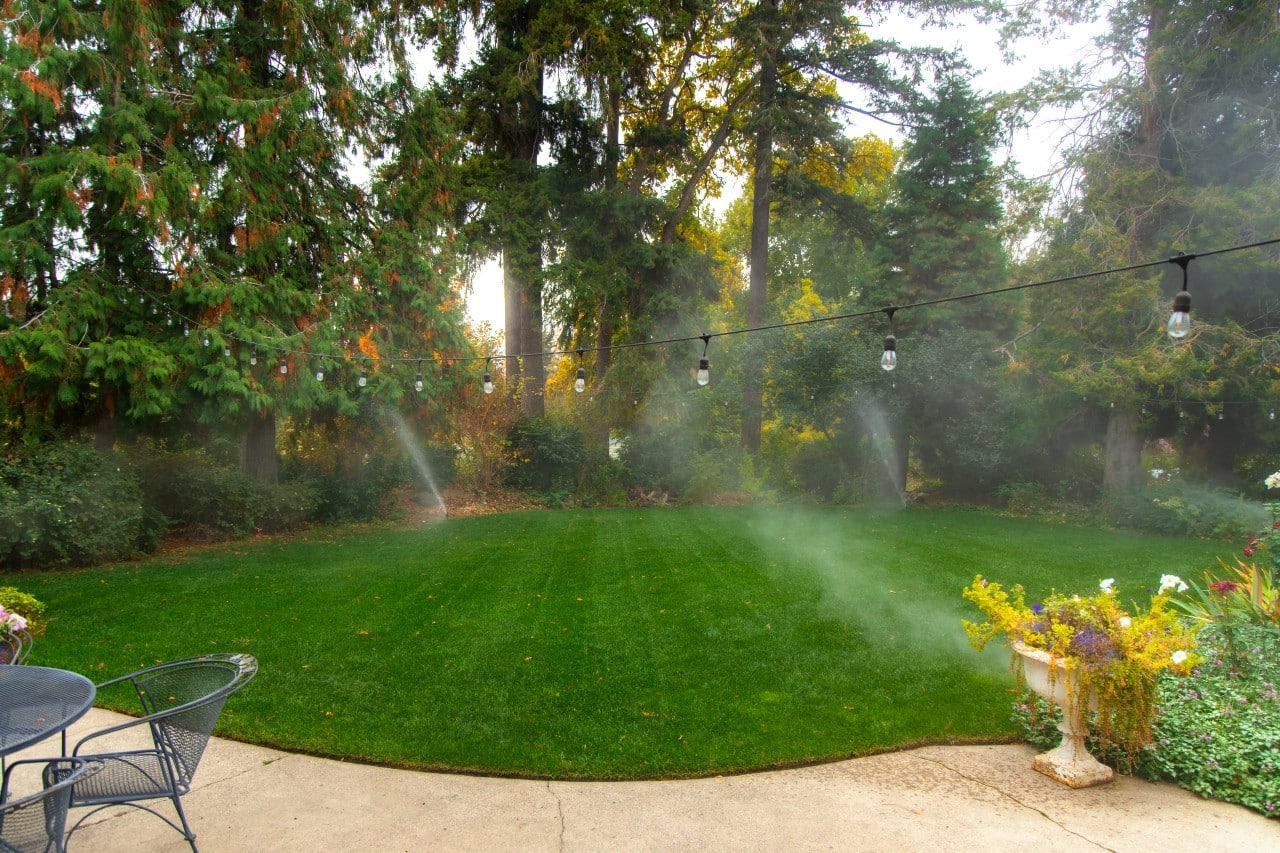
Your sprinkler system plays a big role here. A system with clogged heads, broken zones, or uneven coverage can leave dry patches even when the timer says everything ran. If you have not had your system inspected before peak heat, it is worth doing. A sprinkler tune-up from Colonial Lawn and Garden can catch those issues before they turn into dead spots.
Mowing Habits That Help or Hurt
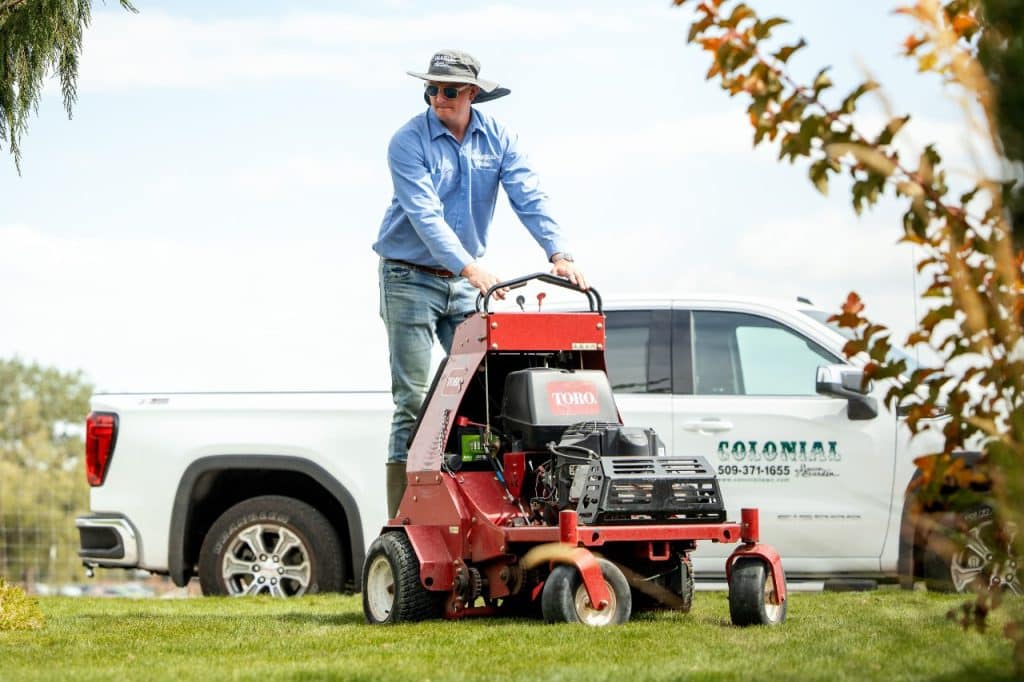
Mowing height is one of the easiest adjustments you can make in summer, and one of the most overlooked. Taller grass shades the soil beneath it, which slows moisture evaporation and keeps the root zone cooler. In peak summer, raise your mowing height by at least half an inch compared to your spring setting.
Avoid cutting more than one-third of the blade at a time. Taking off too much at once stresses the plant, and a stressed lawn in 105-degree heat recovers slowly. If the lawn has gotten long between mowings, raise the deck and take it down gradually over two or three cuts.
Sharp mower blades matter more in summer than any other season. A dull blade tears the grass rather than cutting it cleanly, leaving ragged edges that lose moisture faster and invite disease. If your mower has been running all season without a blade sharpening, now is a good time.
Mow less frequently when growth slows. In peak heat, your lawn is not putting on much new growth. Mowing on the same schedule you used in spring can do more harm than good.
Fertilization in Summer: What to Know
Heavy nitrogen fertilization during peak summer heat is one of the faster ways to damage a lawn. Nitrogen pushes new growth, and new growth in 105-degree heat burns. It also pulls water away from the roots at exactly the wrong time.
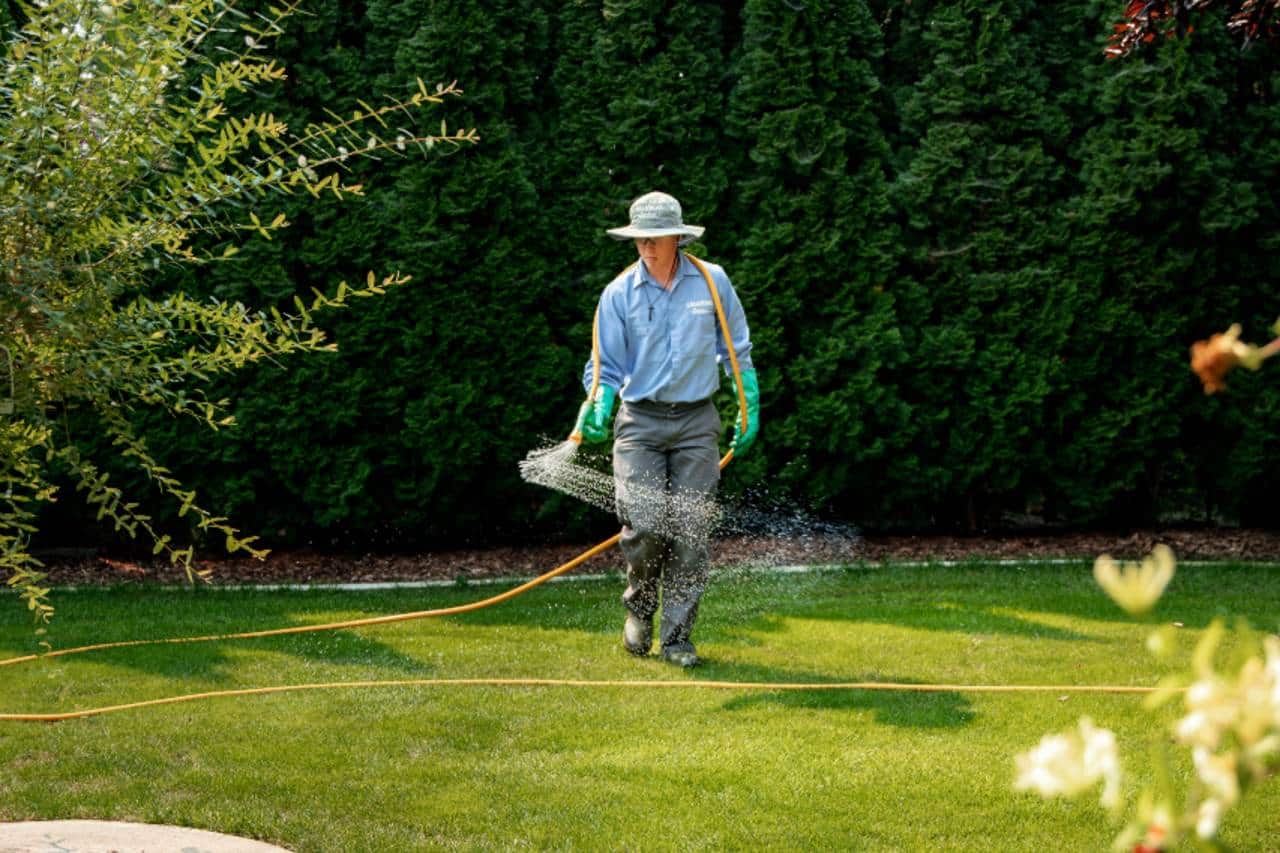
That does not mean you skip fertilization entirely. It means timing and product selection matter. A well-designed fertilization program accounts for the Tri-Cities growing season, applying the right nutrients at the right points in the year rather than on a generic national schedule. Colonial’s fertilization program is built around local conditions, so applications are timed to support your lawn without pushing it into stress.
Weed Pressure in Summer
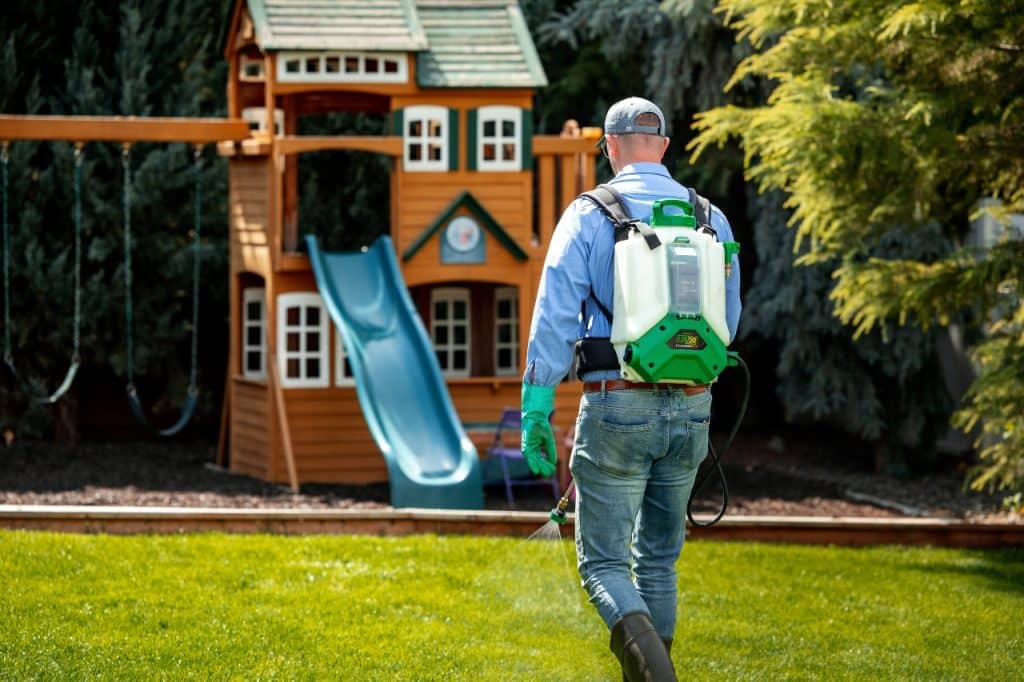
Summer heat slows your grass down. It does not slow weeds down. Crabgrass, spurge, and goathead thrive in hot, dry conditions and move fast into any thin or bare areas your lawn develops. A weakened lawn is essentially an open invitation.
Reactive spot treatment helps, but it rarely keeps up with summer weed pressure on its own. Consistent weed control throughout the season, applied on a schedule, is more effective than chasing problems after they appear. Colonial’s weed control program keeps that pressure manageable so you are not spending your weekends pulling goatheads out of the back lawn.
Pest Watch: What to Look for in Summer
Summer is also when lawn pests become active in Central Washington. Grubs, billbugs, and surface-feeding insects can cause damage that looks a lot like heat or drought stress, which makes them easy to miss.
The key distinction: drought stress tends to be fairly uniform across the lawn, while pest damage often shows up in irregular patches that do not respond to watering. If you water a struggling area and it does not improve within a few days, pests or disease are worth investigating.
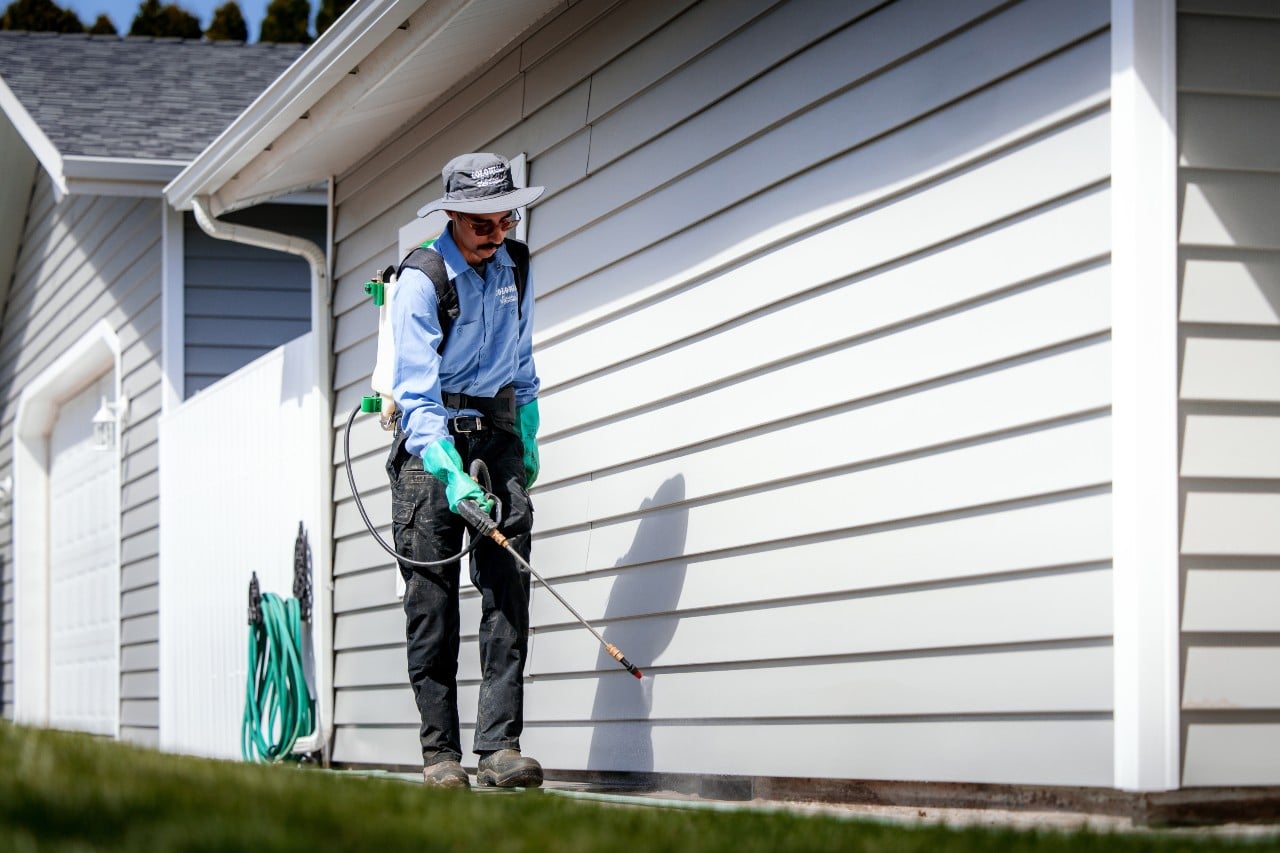
Summer is a critical window for grub treatment in particular. Grubs are easiest to control when they are young and near the surface, which happens in mid to late summer. Waiting until fall makes treatment less effective. If you are not sure what you are dealing with, our pest control service can identify the problem and treat it correctly, rather than guessing at a product from the hardware store.
A Quick Checklist for Summer Lawn Health
- Water deeply and early in the morning
- Raise your mowing height and keep blades sharp
- Avoid heavy fertilization during peak heat
- Watch for irregular damage patterns that do not respond to water
- Check sprinkler heads for clogs and uneven coverage
- Call a professional if damage is spreading or you cannot identify the cause

Let Colonial Take the Guesswork Out of It
Most of the steps above are manageable on your own. The harder part is knowing when to act, what product to use, and whether what you are seeing is heat stress, a pest, a watering problem, or something else. That is where a lawn care program makes a real difference.
Colonial Lawn and Garden has been working in Tri-Cities yards long enough to know what summer does here. Our fertilization, weed control, and pest control programs are built around the Central Washington growing season, not a one-size-fits-all national schedule.
Ready to take the guesswork out of summer lawn care? Contact Colonial Lawn and Garden to learn about our fertilization, weed control, and sprinkler maintenance programs built for Tri-Cities summers.