You put in the work. You mow, you water, you pull the occasional weed. But if your lawn still looks thin, patchy, or just a little off, the problem might not be effort. It might be timing.
Fertilization is one of the most effective tools a homeowner has for building a healthier, greener lawn. But applying it at the wrong point in the season can be ineffective at best and harmful at worst. The Tri-Cities climate adds another layer to that equation. Hot, dry summers, irrigation-dependent lawns, and seasonal temperature swings mean a generic national lawn care schedule often misses the mark here in Eastern Washington.
The good news is that once you understand how your lawn grows through the seasons, the timing starts to make sense.
In this post, you’ll learn:
- When to apply fertilizer in spring, summer, and fall in the Tri-Cities
- Why fall fertilization is the most important application of the year
- How to pair fertilization with weed control and watering for better results
- What a professional lawn care schedule looks like compared to DIY guessing
Why Fertilization Timing Matters for Tri-Cities Lawns

Grass is not hungry all year. It has active growth periods, stress periods, and dormancy, and fertilizer works best when it follows that natural cycle rather than a date on the calendar.
Fertilization supplies grass with key nutrients including nitrogen, phosphorus, and potassium. These support green growth, stronger roots, and the kind of resilience that helps a lawn hold up through heat and drought. But applying those nutrients when the grass is not actively growing, or when it is already under stress, can do more harm than good.
The Tri-Cities climate makes timing especially important. Eastern Washington summers are hot and dry. Lawns here depend on irrigation, face heavy weed pressure from plants like crabgrass, goathead, and bindweed, and go through real seasonal stress that lawns in milder climates simply do not experience. A lawn care schedule built for Seattle or a national average is not built for Kennewick or Richland.
Spring Fertilization: Getting Your Lawn Off to the Right Start
Spring is tempting. The weather warms up, the lawn starts greening, and the urge to do something is strong. But the timing of that first fertilizer application matters more than most homeowners realize.
The key signal is active growth, not the calendar. Fertilizing too early, before the grass is truly growing, can push top growth before the roots are ready to support it. A good rule of thumb: wait until the lawn has been mowed at least once and temperatures are consistently holding in the 50 to 60 degree range before applying that first treatment.
Spring is also the right time to pair fertilization with pre-emergent weed control. Pre-emergent treatments work by coating dormant weed seeds and creating a barrier that stops them from sprouting. Getting that application down before weeds like spurge, crabgrass, and oxalis germinate is far more effective than trying to eliminate them after the fact. A well-fed lawn also naturally crowds out weeds by growing thicker and more competitive.
Summer Fertilization: Protecting Your Lawn Through the Heat
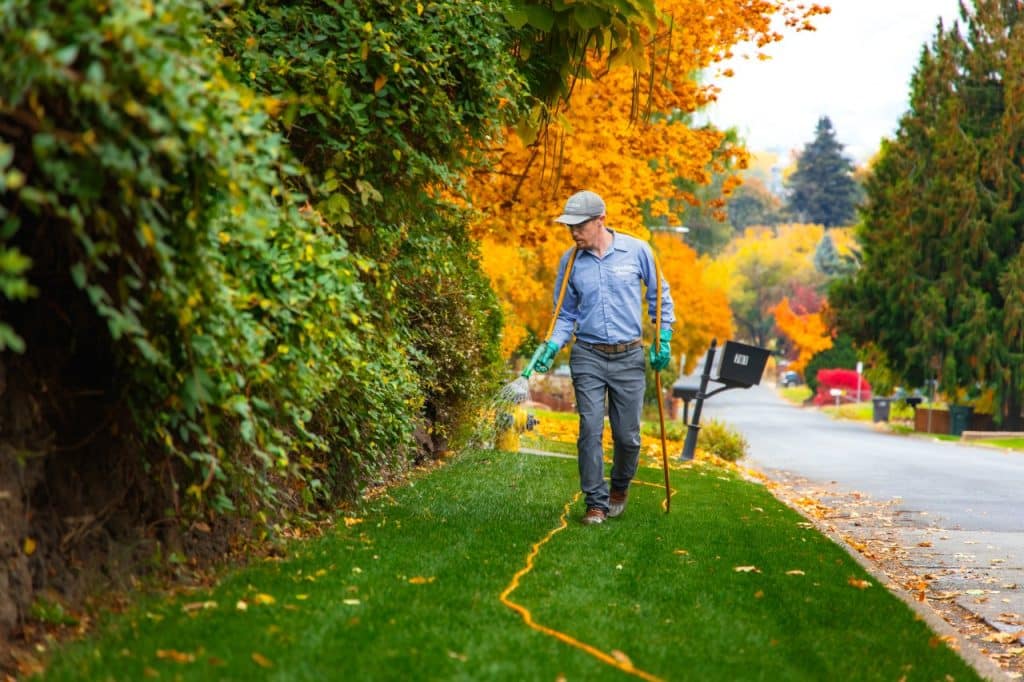
Summer in the Tri-Cities is not the time to push aggressive growth. When temperatures climb and irrigation becomes the only thing keeping the lawn alive, the grass is already working hard just to stay healthy.
Heavy nitrogen fertilization during peak summer heat can cause burn and add stress to a lawn that is already struggling. If your lawn shows signs of stress, such as a dull color, slow recovery after foot traffic, or dry patches despite watering, the answer is usually better watering practices, not more fertilizer.
Light, slow-release fertilization paired with deep, infrequent watering can support the lawn through summer without pushing it past its limits. The goal in summer is maintenance and protection, not rapid growth. Fertilizer works best when water is moving nutrients down to the root zone, so watering practices and fertilization timing go hand in hand during the hottest months.
Fall Fertilization: The Most Important Application of the Year
If there is one season to get right, it is fall. Both regional lawn care experts and Washington-area landscapers consistently point to fall as the most critical fertilization period for cool-season turf, and for good reason.
As temperatures cool down in late summer and early fall, grass shifts its energy from top growth to root development. Fertilizing during this window gives the lawn the nutrients it needs to build deeper, stronger roots before winter dormancy sets in. That root strength is what determines how quickly and fully the lawn recovers in spring.
An early fall application supports root growth and overall lawn health, while a later fall application, timed before the ground freezes, helps the lawn store nutrients through winter and green up faster when temperatures rise again. Skipping fall fertilization is one of the most common reasons lawns come back thin and slow in spring.
Fall is also a good time to address any weeds that survived summer and to assess how the lawn held up through the heat. Going into winter with a clean, well-fed lawn gives you a real head start on the following year.
Professional Lawn Care vs. DIY Fertilization
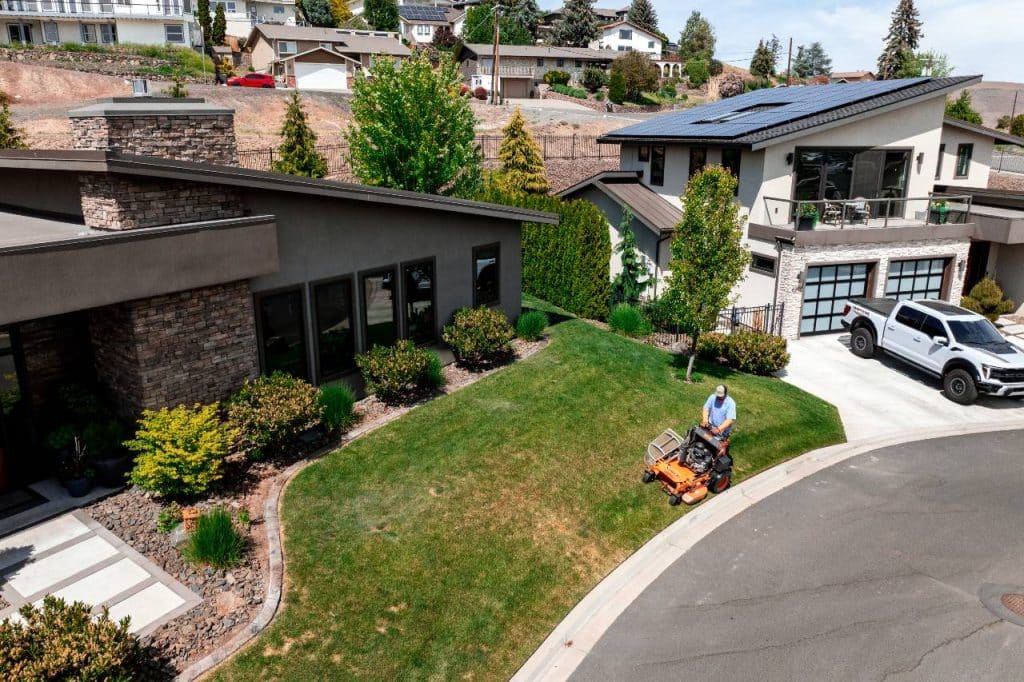
Fertilizing a lawn sounds straightforward until you factor in timing, product selection, application rates, weed pressure, soil health, and seasonal adjustments. That is where a lot of homeowners run into trouble.
Lawn treatment is not about tossing out products to see what sticks. It requires a plan built around the lawn’s actual conditions: soil health, water availability, grass type, and the specific environmental pressures of Eastern Washington. Over-fertilizing, applying treatments at the wrong time, or skipping weed control can undo months of effort.
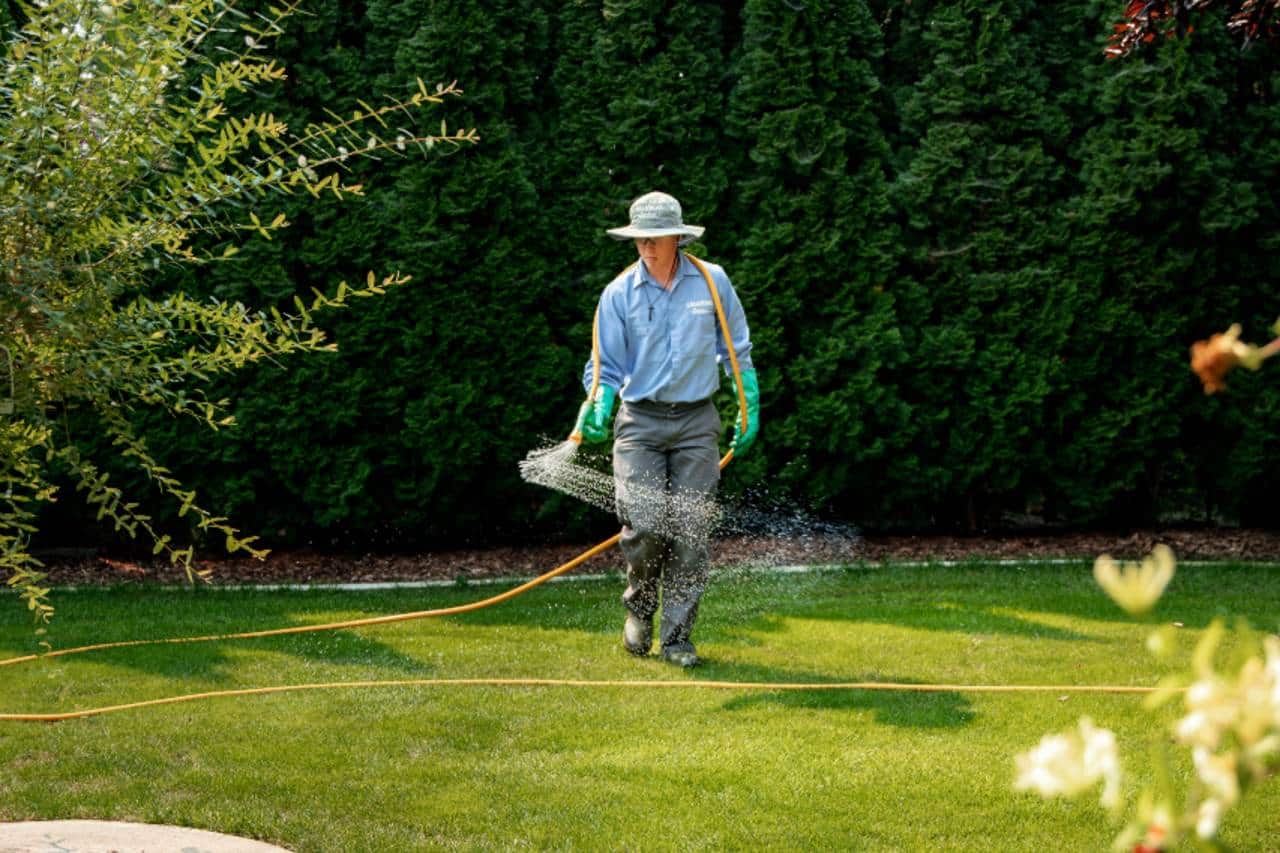
A professional lawn care schedule removes that guesswork. Colonial Lawn & Garden’s lawn treatment services are built around the Tri-Cities climate, with program options that include 4 or 6 applications spread across the year. Each visit covers fertilization timed to the season, pre-emergent and post-emergent weed control, grub control, and inspections from licensed technicians who can spot problems before they become bigger ones. Fertilizers are kid and pet friendly once dried.
Instead of wondering whether you fertilized too early, too late, or with the wrong product, you get a consistent lawn care schedule designed around what Eastern Washington lawns actually need.
Get Your Tri-Cities Lawn on the Right Schedule
Timing is everything when it comes to lawn fertilization in the Tri-Cities. Spring sets the foundation. Summer calls for caution and smart watering. Fall is where the real work happens, building the root strength that carries your lawn through winter and into a stronger spring.
Ready to stop guessing and start seeing results? Contact Colonial Lawn & Garden today to learn about our lawn care program and get your Tri-Cities lawn on the right fertilization schedule. Visit our website or give us a call at 509.371.1655 to get started.