As a homeowner, the year can come and go quickly. With a long list of “to-dos” for property conservation, it can be easy for seasonal lawn maintenance to slip through the cracks. However, the health and beauty of your lawn is just as crucial for your property value as other tasks. Today, we are here to share with you how adjusting lawn care strategies throughout the year will keep grass healthy, resilient, and attractive.
The 4 Cycles of Seasonal Lawn Maintenance

Unfortunately, homeowners cannot perform the same lawn routine throughout the entire year. Factors such as temperature, rainfall, and growth cycles all affect grass health and longevity. You must practice season-specific care to avoid common issues like weeds, thinning, disease, or damage. Let’s dive into the four different seasons and what you must prioritize for seasonal lawn maintenance:
Spring Lawn Care
As the snow slowly melts away and the earth reawakens from her slumber, the first steps you take in the new year for your lawn are critical to its health, setting the foundation for all the coming seasons.
First, remove any leftover debris from winter, such as fallen leaves and limbs. This clears the path for the rest of your seasonal lawn maintenance.
Next, it is time to lay the foundation of your lawn. You will want to spread fertilizer, pre-emergent weed control, and potentially overseed your lawn if you are already seeing bare spots. You will want to use spring techniques for these processes, so make sure to evaluate your methods and products before getting started.
Lastly, you will need to water with care and mow gently. We suggest leaving your grass a little longer than usual and never cutting more than one-third of its height at a time.
Preparing and executing seasonal lawn maintenance in the spring is essential, but it is also time-intensive. If you don’t have the time or desire to do it yourself, professional services can help establish a strong foundation for summer growth.
Summer Lawn Care
As the heat rises here in Eastern Washington, monitoring the health of your lawn becomes a frequent necessity.
We suggest taking a walk throughout your yard once a week to ensure it is getting plenty of water and to identify lawn diseases before they spread. Not only will frequent monitoring ensure your lawn doesn’t suffer from heat stress or disease, but it will also allow you to make subtle adjustments to your watering and mowing schedules to meet the unique needs of your lawn.
Pro Tip: Watering in the summer is best done early in the morning every couple of days with deep watering. You should aim for one inch of water per week, including rainfall and any other sources.
Of course, we understand that summertime is meant to play, not to sweat it out over the lawn. If you want to avoid the summer stress and still have a gorgeous lawn, a professional service can ensure proper care to keep your lawn green and healthy.
Fall Lawn Care
Many homeowners believe that fall is their break from seasonal lawn maintenance, but it is actually a critical time for care. Treating lawns in the fall helps them recover from summer stress and strengthens them before winter dormancy.
First, if you haven’t aerated your lawn in the last couple of years, now is the ideal time to do it. The combination of cooler temperatures and moist soil conditions makes it a prime time for grass recovery and establishment.
Second, you will want to overseed and lay down fall fertilization. As you monitored your lawn over the spring and summer, you have likely gained an understanding of what your lawn lacks in nutrients. Now is the time to supplement it accordingly to give it the strongest chance of survival in winter.
Lastly, make sure to take the time to clean up fallen leaves. While pretty, fallen leaves left unraked can smother your grass, blocking out critical sunlight, air, and water. Not only does this weaken the grass, but it also makes it susceptible to diseases and mold. You especially want to do this before the first snowfall.
Winter Lawn Care
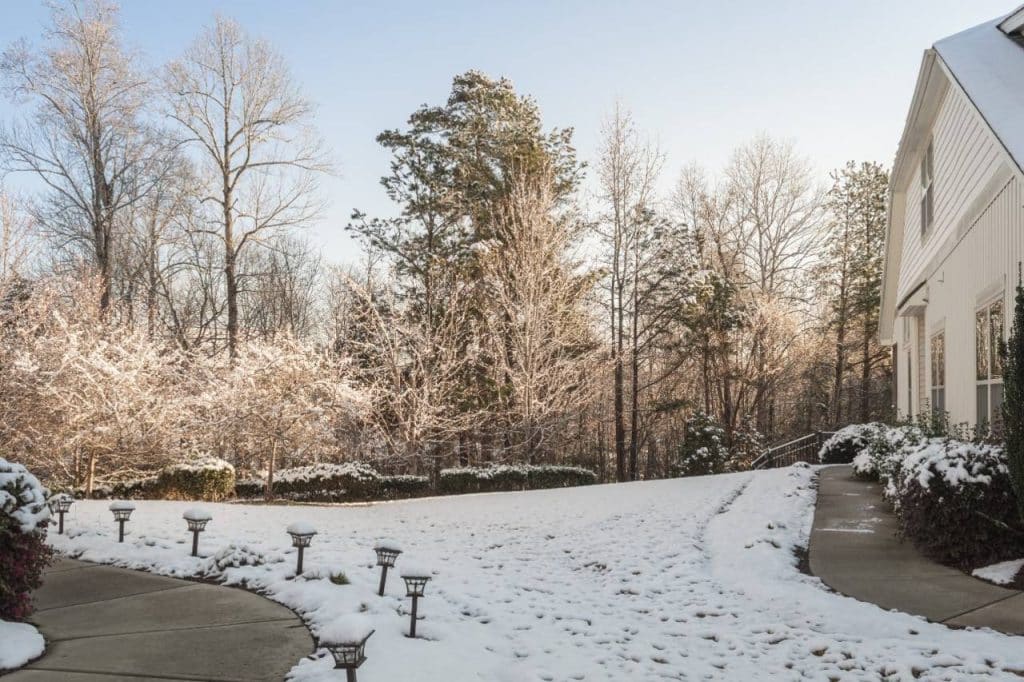
When winter arrives, it demands a different kind of care than you have pursued the rest of the year. We often suggest to our clients that winter is a time for protection and preparation rather than neglect.
We suggest planning for your spring maintenance, especially if you have any construction projects planned. Now is the time to pull permits, design blueprints, and schedule your teams.
In terms of protection, your goal throughout winter is to protect your dormant grass. Just because it is brown and not growing doesn’t mean that it is dead. It is very much alive, but highly fragile. In order to protect your grass, we suggest you:
- Don’t rake or shovel snow off the lawn.
- Use a slow blower instead.
- Don’t let snow pile up deeply.
- Regularly blow the snow off to prevent the lawn from becoming oversaturated.
- Don’t walk on the lawn when it has frost or ice
- Stick to sidewalks or non-grass areas
- Don’t use salt or de-icing products on the lawn
- Be careful to only use it on sidewalks or driveways. Although using sand or sawdust would be a preferred alternative.
- Don’t water the lawn regularly during the winter.
- Only water on warm days when there is no expected freeze overnight.
Pro Tip: Snow-blowing equipment can be expensive to buy and maintain. If the thought of DIYing your snow removal sounds annoying, we at Colonial Lawn & Garden offer snow services.
How Colonial Lawn & Garden Can Make Your Seasonal Lawn Maintenance Easy
Want a lawn that thrives in every season without extensive time or effort spent? Hiring a professional lawn maintenance team to manage your property is the best approach. You can sit back and enjoy your weekends while we take care of the work.
Schedule your seasonal lawn maintenance with Colonial Lawn & Garden today and enjoy expert care all year long.